Adam Hanzel
Marie Skłodowska-Curie Doctoral Fellow (EU-GLOCTER), Metropolitan University Prague
Counterterrorism in EU strategic relations with Eurasia
I am a Marie Skłodowska-Curie Doctoral Fellow (EU-GLOCTER) doctoral fellow at the Centre for Security Studies (C4SS) at Metropolitan University Prague. I hold bachelor's degrees in computational linguistics and in Russian and Eurasian studies, and a master's degree in Russian and Eurasian studies, all from the University of Texas at Austin.
My dissertation analyses the trends and policy implications of counterterrorism legislation in Eurasia from 1991 to the present: how counterterrorism policy develops, what is proposed and enacted, and how counterterrorism comes to justify other changes to the rule of law. My research is mixed-method and interdisciplinary, combining regional expertise and qualitative analysis with natural language processing, knowledge graphs, and machine learning.
Beyond the dissertation I have published on radical Russian Orthodox groups, Russia and global targeted-killing programs, and Russian hybrid warfare against regime dissidents. Current writing covers artificial intelligence in the social sciences, knowledge-graph and machine-learning applications in intelligence, and targeted killings as an emerging global phenomenon.
Affiliations: Centre for Security Studies (C4SS), Metropolitan University Prague · International Centre for Counter-Terrorism (ICCT), The Hague · International Association for Intelligence Education (IAFIE) · The Russia-Latin America Observatory (Ruslat) · Global Disinformation Lab (GDIL) · AI Safety and Security in Digital Humanities research group, University of Texas at Austin.
Research
Counterterrorism in EU Strategic Relations with Eurasia
A comparative corpus analysis of national legislation from four post-Communist/post-Soviet states, built into a single citation and amendment graph. The core claim is about layering: new counterterrorism laws are stacked onto inherited legislation and structures rather than replacing them, with consequences for EU approximation and the rule of law that outlasts the threats that justified them.
Computational legal text analysis
Cross-lingual citation resolution for corpora published without machine-readable references, multi-embedding semantic classification of legislation against seed laws, and transformer topic modelling of legislative history. Ukrainian, Bulgarian, Hungarian and Russian material; Cyrillic and Latin scripts.
State-sponsored targeted killings
A flexible escalation model for comparative cases of state-sponsored assassination, and a target typology of post-Soviet retributions. Visualised with D3 and ArcGIS against the demographics of assassination locations.
Disinformation, media and AI
Mediated post-truth in the Russian imagination, AI as a cultural object in digital authoritarianism, and AI-assisted forensic reading and knowledge graphs in intelligence studies and spy fiction.
Publications


In production
- 2027Adam Hanzel et al. “Alternative AI and Digital Authoritarianism: Analyzing AI as a Cultural Object.”
- 2027Adam Hanzel. “Legislating Security: Computational Mapping of Ukraine's Counterterrorism Legislation 1991–2026.”
- 2027Adam Hanzel and Kiril Avramov. “‘Russia Has a Different Path’: Yarovaya and the Russian Security Council Redefining and Normalizing Terrorism in Eurasia.”
Talks and conference contributions
- 1–3 June 2026Knowledge Graphs and AI-assisted “Forensic Reading” in Bulgarian Spy Fiction
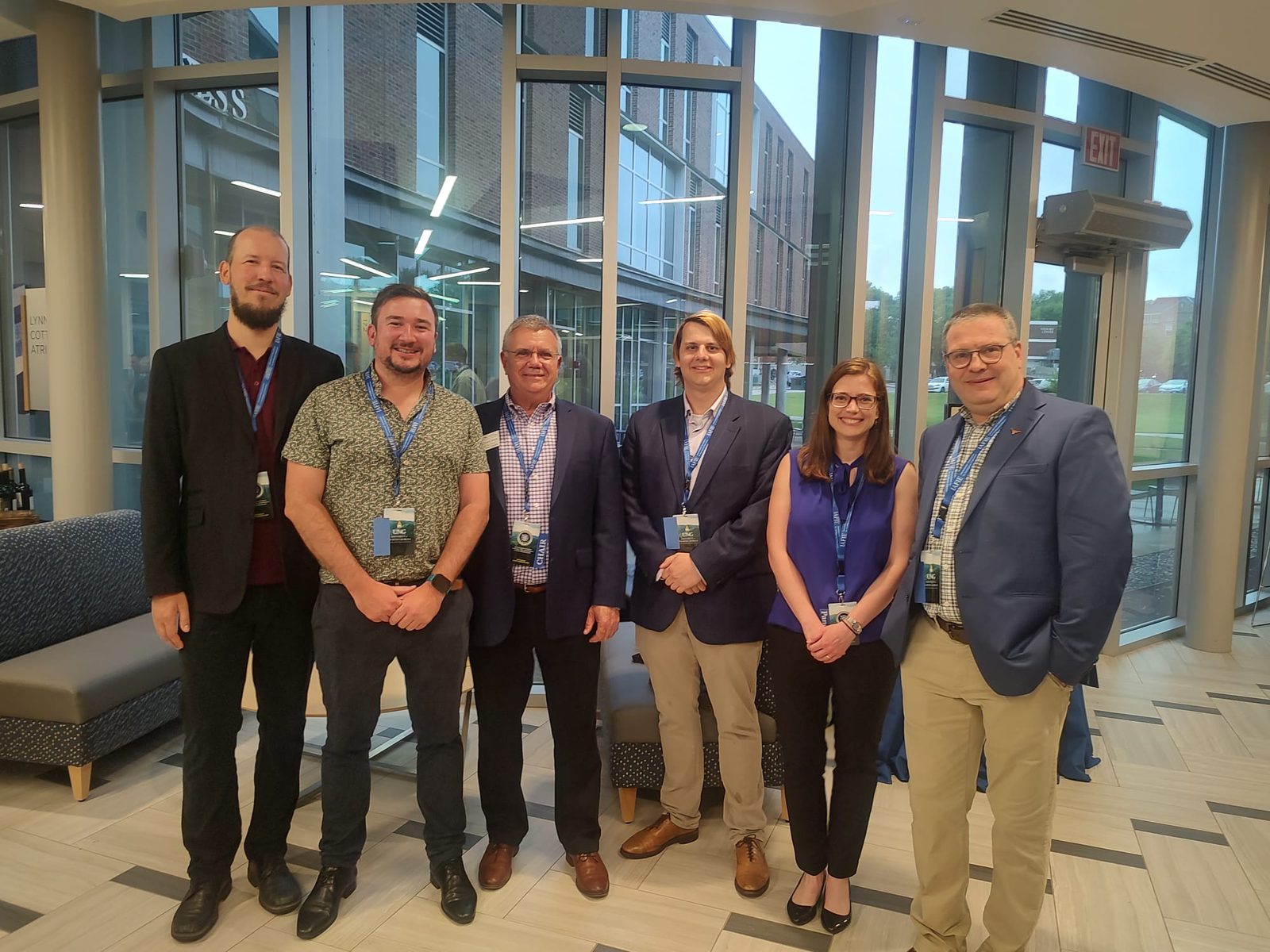
IAFIE Global Conference, University of North Georgia, USA - 10 April 2026Counterterrorism in EU Strategic Relations with Eurasia
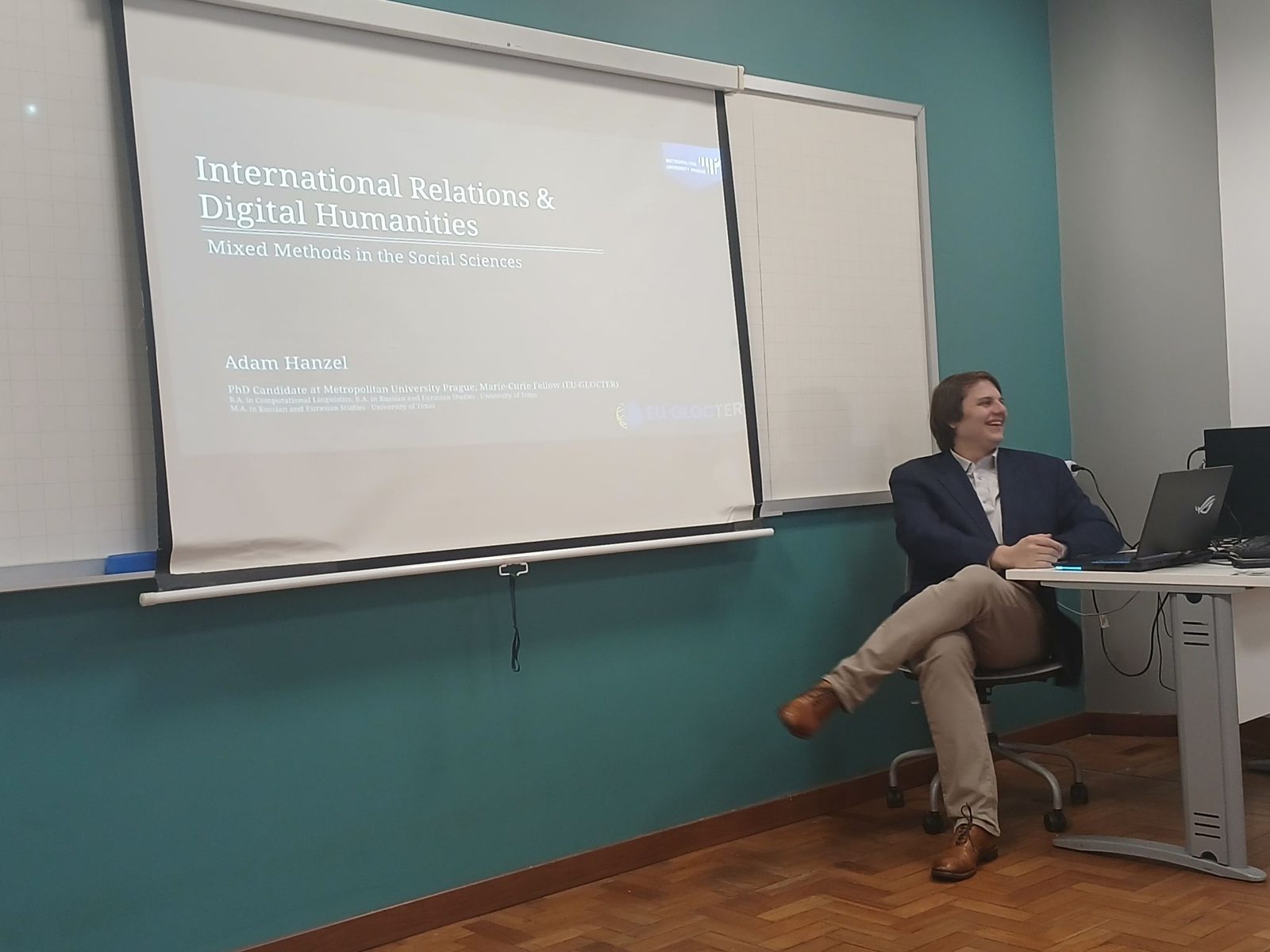
ICCT, The Hague, Netherlands - 27 November 2025Digital Humanities Methods in the Social Sciences
PUC Minas Gerais, Belo Horizonte, Brazil - 9 September 2025“Ladders of Escalation”: Flexible Modeling in Comparative Cases
IAFIE Europe Annual Conference, Madrid, Spain - 13 February 2024Russian Orthodoxy as Political Tool of Putin
Osher Lifelong Learning Institute, University of Texas at Austin - 15 December 2023The Logic of Vengeance: Patterns of Escalation of the Post-Soviet Targeted Killings
EUACADEMY conference, co-funded by Erasmus+ - 1 December 2023Indigenous Peoples Misrepresentation Heuristic
University of Texas at Austin - 12 October 2023Raskol Ripples: Schism into the 19th Century
University of Texas at Austin - 12 October 2023The Logic of Vengeance
Hybrid Warfare Security Conference, University of South Wales - 17 May 2023Crossing the “Red Lines”
State-Sponsored Assassinations in International Politics, History, and Law, Swansea University - 24 April 2023Mediums, Media, and Mediated “Post”-Truth: Baba Vanga in the Russian Imagination
UT CREEES one-day workshop, University of Texas at Austin
Developed tools
Legislation Research Dashboard
Read-only web interface for cross-jurisdiction legal search over full document text, provisions and legislative-history records, with morphology-aware query expansion, matched-term timelines and an interactive directed citation-network graph. The full dashboard runs against a 28 GB Neo4j graph and is not public; the demo below serves real citation neighbourhoods from the Ukrainian corpus as static data.
Open the citation-network demo →Comparative Legislative Knowledge Graph
Python and Neo4j pipeline that scrapes, sections and ingests national legal corpora from four post-Communist states into a single citation graph.
Cross-Lingual Legal Citation Extractor and Resolver
Recovers citation networks from corpora published without hyperlinks, resolving references by act title and article through a corpus-derived index. Handles Bulgarian definite-article morphology and unpublished parent codes.
Multi-Space Semantic Classifier for Legal Text
Scores legislation against seed-law centroids in three independent embedding spaces (OpenAI text-embedding-3-large, BGE-M3, Qwen3-8B) as a replication design, with bounded-chunk scoring and a Wilson lower bound to remove document-length bias.
Legislative Document Extraction and OCR Pipeline
Retrieves and text-extracts parliamentary bill attachments across PDF, Word, Excel, RTF and legacy encodings, with a Tesseract fallback for scans. 4.3 billion characters recovered from 315,000 files at 98% extraction.
BERTopic Legislation Modelling
Transformer topic model grouping legislation by semantic content and metadata.
Telegram Scraper and Archiver
Command-line tool on Telegram's API that walks selected channels and archives message metadata, text and media to a database.
Static and Dynamic Web Scraper
Command-line scraper for static and JavaScript-rendered sites, storing page text and metadata.
ACH Analysis in Google Sheets
Port of an Analysis of Competing Hypotheses algorithm and further statistics to Google Apps Script for version-controlled, multi-user analysis.
Zotero Cyrillic Transliteration Translator
Zotero add-on that cites transliterated titles with end-of-citation sources for drafting.
Fine-Tuned GPT-2 Disinformation Generator
Language model trained on Sergey Lavrov's MFA speeches to produce synthetic addresses, evaluated by disinformation experts.
Photos